Today I’m sharing my recipe for Vegetable Kimbap or Gimbap. Many people spell Kimbap as Gimbap and both are correct. However, to me it sounds like Kimbap when Koreans pronounce it. Kimbap is A Korean dish of sliced rice rolled up in dried edible seaweed sheets. Though somewhat similar to the Japanese Sushi, it’s actually quite different. Kimbap can serve as an anytime snack, light lunch, picnic food,or a party appetizer.

I must confess that I knew very little about Korean food beyond Bibimbap and Kimchi. That was until I discovered K-Dramas on Netflix and Prime! While television series are never a true showcase of any country’s culture, they can provide an insight. So I discovered that Koreans will eat rice any which way anytime of the day. That their love for Soju and anything pork is almost unreal. Korean Kimbap is a much loved dish, and it is not Sushi.
The name Kimbap come from Kim which is seaweed sheets and Bap meaning rice. As someone laughingly said, if there’s rice rolled up in seaweed sheet, its pretty much Kimbap! Kimbap though, is much more. Broadly speaking, there are three main kinds of Kimbap. Chungmu Kimbap is just a rice and seaweed paper roll while Mayak Kimbap is a small vegetable filled seaweed paper roll. Samgak Kimbap is triangular in shape. Beyond this, there as many kinds of Kimbap as there are Kimbap makers.
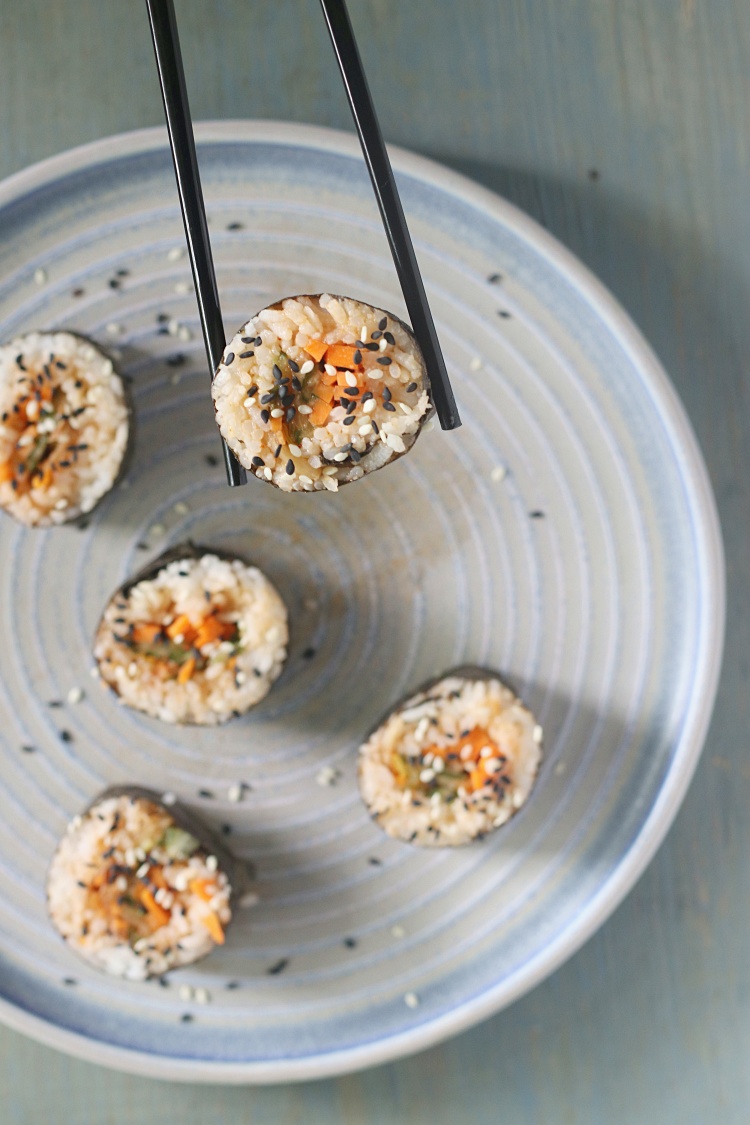
So how is Kimbap different from Sushi? Obviously, one is Korean and the other is Japanese. Sushi generally contains raw fish whereas Kimbap rarely does. It mostly contains cooked ingredients like meat, omelet strips, pickled vegetables, fried tofu and sometimes canned fish. The rice for Sushi is usually seasoned with a mixture of rice vinegar, sugar and salt. The rice is stickier (not glutinous) in Kimbap and seasoned with sesame oil and salt. Also the seaweed sheets are lightly roasted.
Kimbap is mostly eaten as it is and usually without any dipping sauces. Sometimes pickled vegetable is served on the side. However, it can be served with sauces on the side, according to personal preference. Sushi is usually served with pickled ginger and a flavoured soy sauce for dipping.
Traditionally, there’s a variety of fillings that can be used in Kimbap. This includes yellow pickled radish or Danmuji, tofu, squid, beef, pork, crab meat, strips of omelet, stir-fried vegetables, Kimchi, etc.
Typically, Kimbap is made by first toasting seaweed sheets over low heat. Cooked short to medium grain rice (not glutinous rice) is seasoned with salt and sesame oil. The Kimbap is rolled using a bamboo mat called Gimbal. The seaweed sheet is placed on this. Then a thin layer rice is spread evenly. Other ingredients are neatly added on top and then gently rolled into a cylindrical shape using the bamboo mat. This is cut into slices about 1.5 inches wide and served.
As for recipe there’s no strict recipe as such. It can be made with a variety of combinations of vegetables, tofu, and egg. They’re also a great way put leftovers to good use. If you’re making or eating Kimbap for the first time, I must warn you that seaweed sheets have a fishy/ ocean-y smell and flavor.
Kimbap is best eaten the same day it is made. Leftover Kimbap can be refrigerated in airtight food containers. If the rice in the Kimbap feels a bit dry, you can coat both sides with beaten egg and pan fry till golden before serving it.
To make Vegetable Kimbap or Kimbap in general, you don’t really need a recipe. What you need is a set of ingredients and how to prep them. Apart from your kitchen staples and seasonings you need some other things. Rolling Kimbap can take a bit of practice. The trick is to make sure the layer of rice is not too thick, and you’re reasonably generous with the filling. Also the rolling needs to be as tight as possible. Too much of filling can cause the Kimbap open up.
You need Seaweed or Nori/ Sushi sheets. You can buy these at most speciality grocery stores or online. These sheets need to be roasted before making Kimbap. The sheets I bought came pre-roasted. Seaweed sheets tend to taste fishy or of the sea and can be an acquired taste for a lot of people. If you don’t like them, you can rice paper, or lettuce to Kimbap.
A bamboo mat called Gimbal in Korean or Makisu in Japanese is very helpful. The seaweed sheets are laid on this and the mat is used to roll up the Kimbap. It is not absolutely necessary but it helps roll up the Kimbap tightly. You can also use silicon mats or plastic film. Covering the rolling mat with a layer of cling film makes it easy to clean afterwards.
Then comes the rice. You don’t need glutinous rice. In fact, don’t use it. You need a short or medium grained starchy variety of raw rice. I have used Sona Masuri successfully. Cook the rice soft but not mushy. The starch in the rice will help you pack the rice well on the seaweed sheets and also hold the filling in place. The rice needs to be cooked and mixed with a little sesame oil and some salt, then cooled. For Sushi, rice is typically seasoned with vinegar, sugar and salt.
Then comes the subject of fillings. As I mentioned earlier, Kimbap generally uses sautéed/ stir-fried or pickled fillings unlike raw fillings in Sushi. Fillings for Kimbap should cut long and thin, generally less than 1/4-inch thick and long enough to lay end to end along the width of the seaweed sheet.
Fillings for Vegetable Kimbap can include carrot, cucumber, bell pepper, spinach or fresh coriander with tender stalks, pickled radish (Danmuji), zucchini, extra firm marinated tofu, etc. The vegetables needs to be cut into matchstick thin and long strips. Sautéing some of the vegetables softens them just enough to make rolling and eating Kimbap easier. Sauté vegetables like carrot and bell peppers lightly. Sprinkle cucumber lightly with salt, let it sit for 10 to 15 minutes and gently squeeze out excess moisture to prevent soggy Kimbap. Gently stir fry or blanch the spinach till it just wilts. If you eat eggs, you can make a thin omelette and cut than into thin long strips to add to the filling.
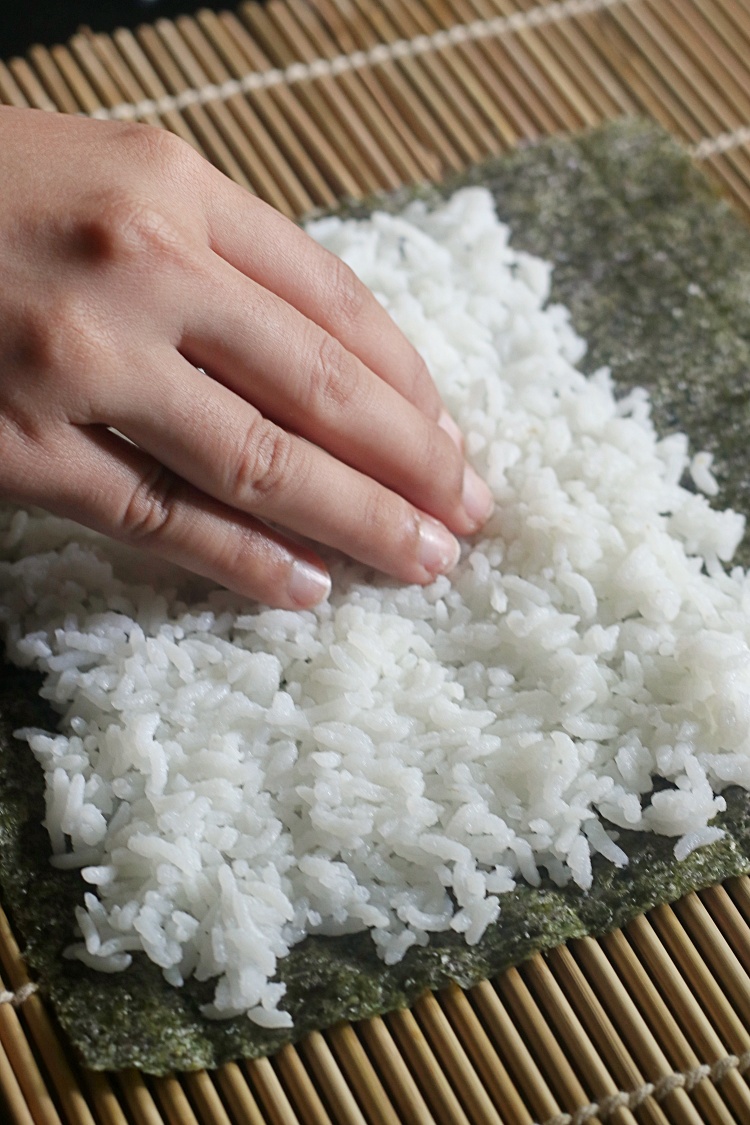
When building the Kimbap. Spread the rice layer somewhat on the thinner side. A very thick layer of rice is not desirable in Kimbap. I personally like a little more rice in my Kimbap that is usually used. Dampen your fingers or lightly oil them to make spreading the sticky rice out easier. Also roll up the Kimbap as tightly as you can for best results.
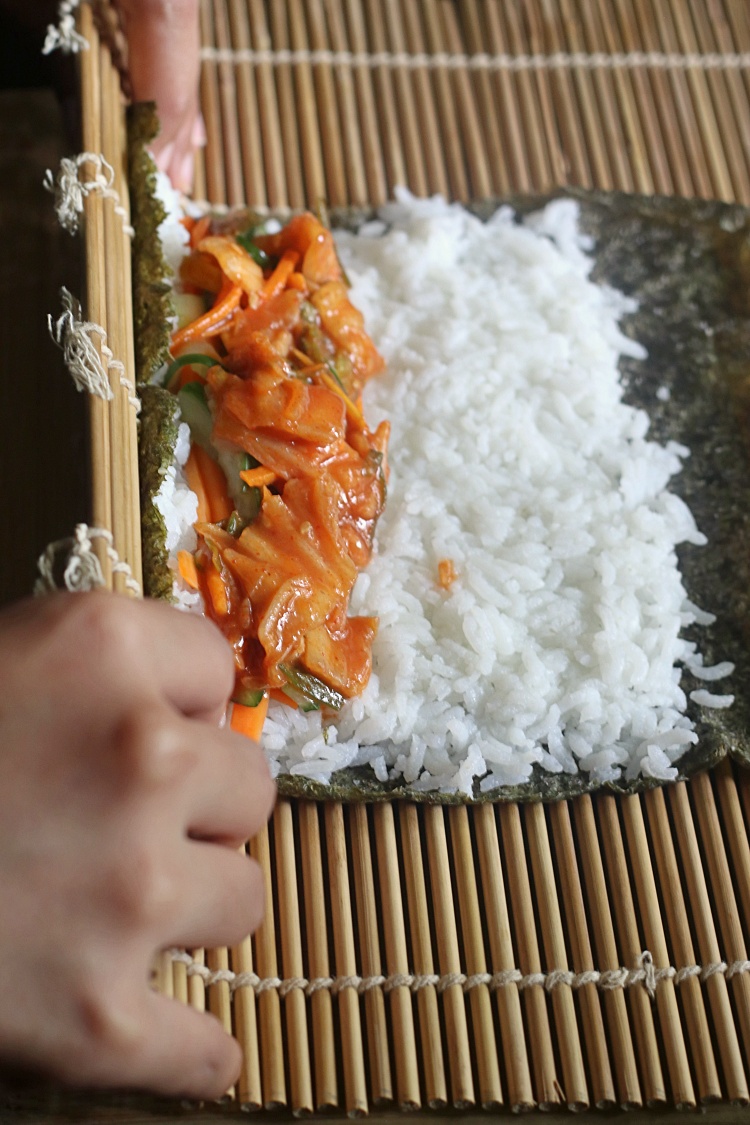
You can use a variety or combinations of vegetables in Kimbap. I usually use a combination of whatever vegetables I have with egg or home-made Kimchi in mine. If you do not have long strips of Danmuji typically used in Kimbap, you can cut the round slices of Danmuji into thin strips and use that instead. Should you use sesame seeds on Kimbap? I like toasted sesame seeds on mine, but you can leave them out. I find Korean Kimbap is very customizable, so make them the way you like them.
Vegetarian Kimbap usually has egg, rice, and veggies rolled in seaweed. You can make it vegan by substituting the omelette strips with fried tofu strips. Kimbap is one of those dishes that works well as a satisfying snack, an appetizer, picnic food, or even a light but balanced meal.
Vegetable Kimbap
Ingredients
For the Rice :
- 1 1/2 cups uncooked short grain rice
- 1 tsp salt
- 1 tsp sugar
- 1 tbsp sesame oil
For the Filling:
- 1 1/2 cup thinly cut/ shredded carrot strips
- 2 cups deseeded thinly cut cucumber strips salted and drained
- Strips of Danmuji Korean pickled radish
- 1 cup thinly cut red bell peppers/ capsicum
- 8 thin strips omelette
- Fresh coriander with thin tender stalks optional
- 4 pieces toasted seaweed sheets gim/nori
- Sesame oil for brushing on Kimbap rolls
- Toasted sesame seeds to sprinkle optional
Instructions
- Cook the rice until soft but not mushy. Fluff the rice and transfer it to a large bowl. While the rice is still hot, mix in the salt, sugar and sesame oil. Set it aside to cool slightly. It is easier to roll Kimbap when the rice is still a bit warm.
- Lightly stir fry the vegetables like carrot and bell pepper. You can use them raw as well. Make sure to drain the salted cucumber well to prevent soggy Kimbap. Salting the shredded vegetables is optional. I prefer not to salt as there’s usually enough salt in the cucumber, the omelette strips. The dip or sauce served with the Kimbap is also salted.
- Get all the things needed for rolling the Kimbap together. A small bowl of water to dampen your fingers will prevent rice from sticking to them. Cover your rolling mat with a piece of plastic wrap.
- Lay one sheet of seaweed on the rolling mat, rough side up. Put a couple of generous tablespoons of the cooked rice on the sheet. Dampen your fingers with water and spread the rice thinly and evenly across the sheet, leaving 1 1/2-inch of sheet uncovered at the top end. Ideally, the rice layer should be about two grains thick.
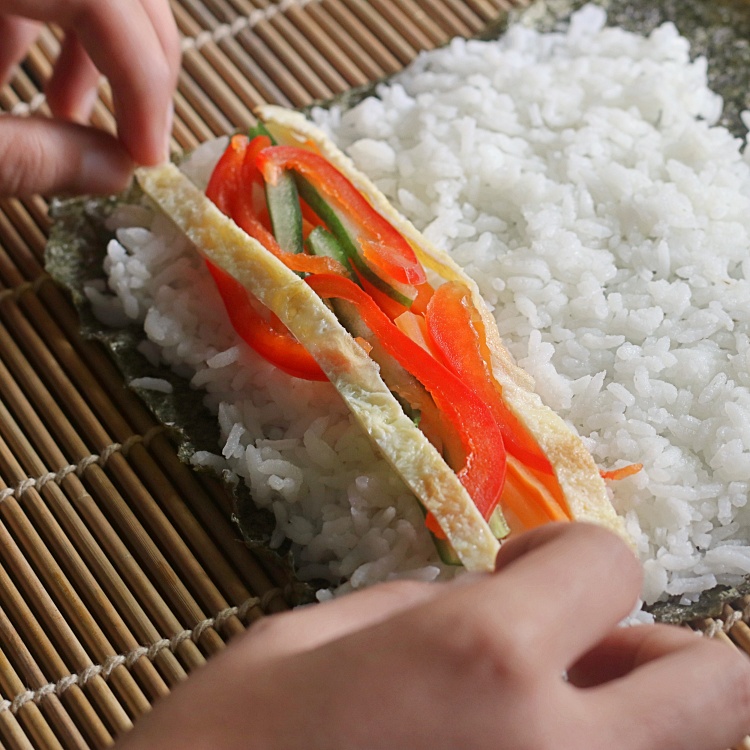
- Start layering the fillings at about 1-inch from the base of the seaweed sheet. Begin with two strips of egg and one strip of Danmuji next to each other. Lay some of the cucumber on top of the egg. Then add the bell pepper and carrots next. Last add the coriander.
- Lift the base of the seaweed and roll it over the filling, squeezing and pressing from the centre out to the edges. Keep the rolling tight. Continue rolling until all the rice is rolled. Then lightly moisten the uncovered edge of the seaweed sheet with a small brush or your finger so it feels sticky and moist. Continue rolling over the wet edge then press down gently to seal. Set aside. Repeat with remaining ingredients.
- Brush the top of the rolls with a thin layer of sesame oil. Slice each Kimbap roll carefully with a sharp knife, into 10 pieces. Plate, sprinkle with sesame seeds and serve immediately.
 I'm Aparna and My Diverse Kitchen is my ovo-lacto vegetarian food blog where you'll find recipes, food stories & photography. I've been blogging since 2007 and believe the kitchen, and the dining table (by extension) is really the heart of a home.
Leave a Reply