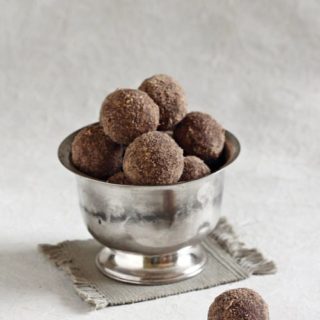
A Week Of An Indian Christmas – Day #4 : Avalose Unda (Cardamom Flavoured Rice & Jaggery Laddoos) & Avalose Podi
A.
Ingredients
For the Avalose Podi :
- 2 cups coarsely ground rice flour
- 1 cup fresh grated coconut
- 1/2 tsp cumin seeds
- 1/2 tsp sesame seeds (optional)
- 1/2 tsp salt
For Avalose Unda:
- 1 1/3 cups powdered jaggery
- 1/2 cup water
- 1 tbsp ghee
- 4 to 5 pods powdered cardamom
Instructions
- If you would like to start from scratch and make your own rice flour, then wash and soak about 1 3/4 cups of raw rice in water for 5 hours. Drain the water, and spread the rice on a clean, dry cotton kitchen towel so that moisture is removed further (about 15 to 20 minutes). Now powder the rice in a mixer/ blender to an almost fine powder. Sieve to remove the larger pieces of rice, and run this again to desired coarseness. The rice powder should feel gritty between your fingers yet be quite fine to the eyes.
- I used store-bought rice flour to make things easier for me. The grated coconut needs to be in thin shreds. If it isn't, run the grated coconut in your mixer/ blender jar a just couple of times to shred it into smaller and almost fine flakes. Do not over process or you will have a wet paste!
- In a large bowl, using your hand and fingers, rub and mix the flour and coconut together. This is so that the moistness of the coconut is released into the flour. Add the salt and mix well and keep covered for about half an hour. This time ensures that the rice flour absorbs the moisture released by the coconut. The flour will not be visibly wet, though.
- Heat a wok and lightly roast, but do not brown the cumin seeds till they release an aroma. Emty out the cumin seeds into a mortar and lightly crush them. Keep aside. Similarly, lightly roast the sesame seeds till the puff up and pop (do not brown) and keep aside, but do not crush.
- In the same wok, put the flour-coconut powder, and over medium heat while stirring frequently, roast until the mixture gives off an aroma and turns a very light brown. Do not let the mixture brown beyond this point. This process will take some time, upto almost half an hour, and patience is required to get it just done.
- Just before the Avalose Podi is taken off the heat add the crushed cumin seeds and the sesame seeds. Stir a couple of times and then take the Avalose Podi off the heat. Use your spatula/ spoon to break any lumps that might have formed while roasting the Avalose Podi. Otherwise use your fingers to do this once it has cooled down. Otherwise just run the Avalose Podi, lumps and all, a couple of times in your mixer/ blender to give it a smoother finish.
- Let it cool completely and then transfer to an airtight container. This will keep for upto 6 months! This recipe makes 3 cups of Avalose Podi.
- Traditionally, Avalose Podi is served with sugar or honey, or sliced bananas which are mashed into the powder before eating it. You can also use this powder to make cardamom flavoured jaggery balls/ laddoos called Avalose Unda. Just follow the recipe below to make this Christmas treat from Kerala, which is also a great non-Christmas time snack.
- For Avalose Unda:
- If your jaggery needs to be cleaned, put the powdered jaggery and water together in a bowl. Stir till the jaggery till it dissolves completely. Let it stand for about 10 minutes so the impurities settle at the bottom. Decant the liquid for use.
- Run the 1/4 cup Avalose Podi in the mixer/ blender to a smooth powder and spread it out in a plate for rolling the Avalose Unda while shaping the laddoos.
- Put the jaggery solution in a saucepan and bring it to boil. Cook the solution, stirring occasionally, till it just reaches a "one-thread" consistency. Take care to ensure you do not cook the jaggery beyond this stage or your unda/ laddoos will become very hard and difficult to eat!
- Take the saucepan off the heat and add the ghee and cardamom powder and mix. Add this syrup to the Avalose Podi and stir with a wooden spoon. It will appear somewhat crumbly/ lumpy but when you take a fistful and try to shape it, it will hold its shape.
- Lightly grease your palms with oil/ ghee. While the mixture is still quite hot but comfortable to handle, take fistfuls of the mixture and shape into small round balls, about the size of small lemons/ limes, working quickly.
- Roll the Avalose Unda in the 1/4 cup fine Avalose Podi (from the first set of steps above) and place on a plate. Repeat until the mixture is used up. Store the Avalose Unda in airtight containers.
Notes
Other Posts In This Series:
Day #1 : Nankhatai (Indian Cardamom Shortbread Biscuits)
Day #2 : Kulkuls/ Kalkals/ Kidyo (Sugar Glazed Deep-Fried Dough Curls)
Day #3 : Baath Cake/ Baatica/ Batega (Goan Coconut And Semolina Cake)
Day #5 : Chakli (Savoury Rice And Lentil Spirals)
Day #6 : Goan Milk Cream (A Cashew And Milk Fudge)
Day #7 : Nevries/ Nevereos/ Neurios (Half-Moon Shaped Sweet Coconut and Semolina Puffs)